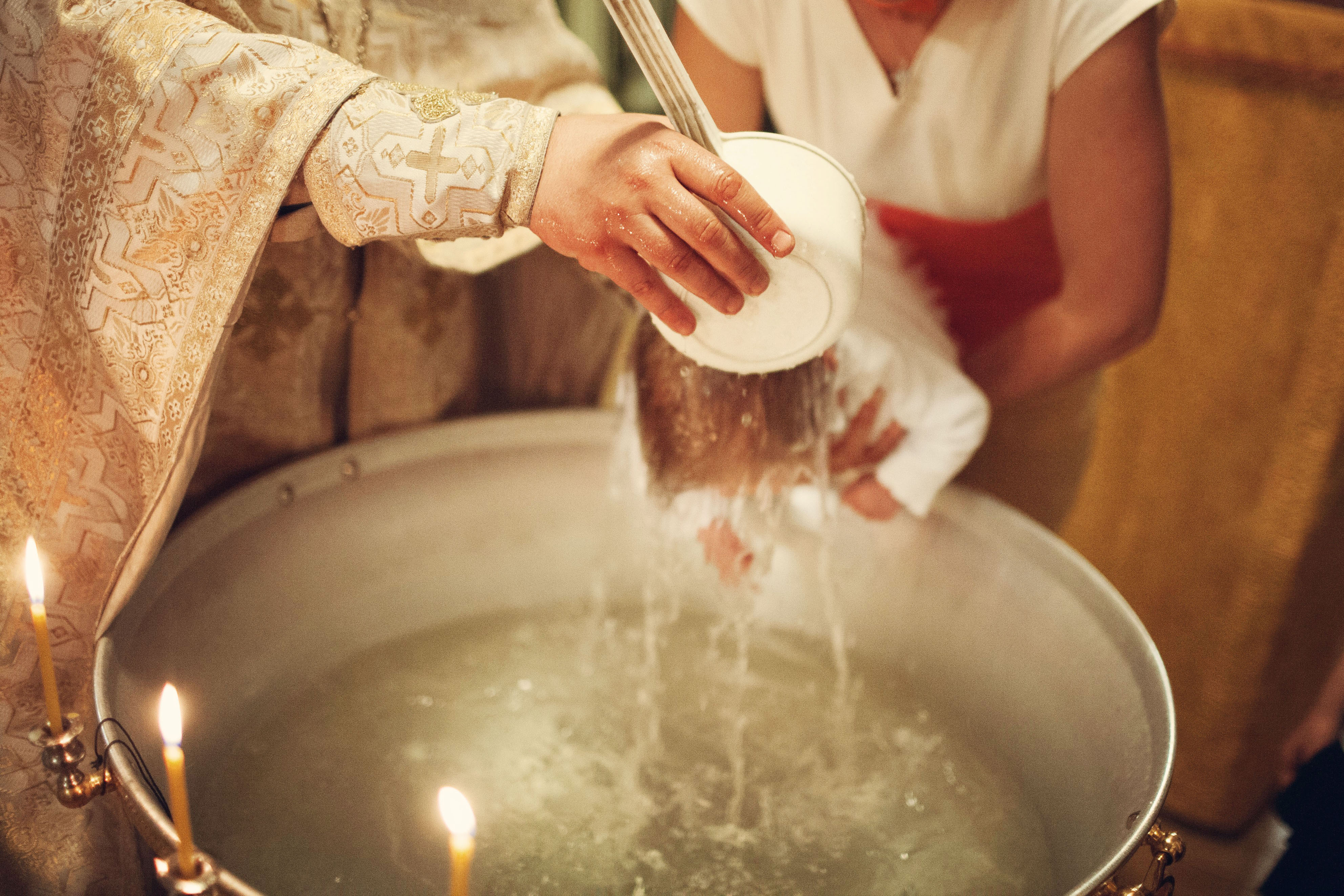
This is part one in a series of entries. This entry will cover the doctrine of infant baptism and baptism as a method for washing away sin.
As a Wisconsin native, the fleeting glimpse of a temperate climate in the traditional summer months inspires a frantic desire to engage in a range of outdoor activities unrestrained by the need for mylar long johns, handmade Alaskan snowshoes, or thermal face coverings alternatively serving as rite of initiation into Shredder’s Foot clan.
Mundane excursions through less familiar, adjacent neighborhoods offer casual family exploration accompanied by a pleasant evening breeze and an emotionally inspiring landscape washed in fluorescent hues of pink and orange from the setting sun. During these times, we often seek landmarks or locations of additional relevance as a family. Of occasional interest to my daughter is the Milwaukee Fatima Archdiocesan Marian Shrine, a product of Catholic devotion built in 1947 by the Dominican sisters.
Exposure to diverse cultural expressions often inspires our children to engage in parental interrogations of curiosity. To cultivate an inquisitive yet sound foundational intellect, we engage in open, honest, transparent discussions that explore alternative thinking while reinforcing credible boundaries. I have no desire to blindly indoctrinate my children, leading inevitably to either unwarranted devotion to intellectually indefensible belief, or an unstable foundation compromised by persuasive but ultimately false argumentation. I encourage them to comprehensively understand what they believe, why they believe it, applying rational thought and critical analysis to arrive at meaningful conclusions.
One evening exploring the Catholic shrine, my daughter wanted to know more about what Catholicism taught and why they taught it. In the spirit of objective discovery, my wife opened a nearby resource cabinet and grabbed an informational pamphlet detailing “foundational” Catholic teaching. Despite attending Catholic school and Catholic Mass through the fourth grade, to say I was unprepared for the contents of what initially seemed like a harmless document is an understatement.
The free publication in question is titled Pillar of Fire Pillar of Truth: The Catholic Church and God’s Plan for You. This unfortunate document resembles Cold War era Soviet propaganda more than religious apologetics or a spiritual resource, lined start to finish with passive aggressive antagonism toward other Christians and intellectually disjointed assertions, communicating a desire for institutional domination and control over freedom through Jesus and spiritual truth. In reality, this publication does more to expose the incoherent nature of institutional, authoritarian teaching than convincingly convey meaningful belief. Although it is certainly not my desire to offend anyone of a Catholic persuasion, the proceeding analysis will be unapologetically blunt, pragmatic, and honest.
Washed Away

“The Catholic church guides you as the pillar of fire guided the Israelites when they escaped from bondage. They had a guide they could trust, and now so do you. Your guide is trustworthy because it teaches as Jesus taught.”
Is that so? Is the Catholic church teaching precisely as Jesus did? Where is the evidence for this claim? Instead, the evidence overwhelmingly opposes this presumptuous and misleading premise.
Where is the evidence that Jesus taught infant baptism or the belief that water washes away sin? According to an article titled What are the historical origins of infant baptism from bible.org, infant baptism is first mentioned by Christian scholar Tertullian roughly 200 years after the crucifixion and at least 100 years proceeding documentation of the New Testament. Both Biblical and alternative historical records clearly identify the baptism of mature, cognitively functional individuals conducted following a profession of faith. Even Jesus himself was baptized as an adult.
So, why did Jesus not explicitly identify infant baptism, why did Jesus get baptized if baptism washes away sin while He had no sin, and why did no one call him out for this, especially amongst those regularly confused by his behavior and teachings? The answer is simple: because infant baptism is a human institution devised through fallible human understanding with no Biblical or explicitly spiritual foundation. A rudimentary historical and Biblical investigation can dispel any falsehood and eradicate any uncertainty.
Let’s look first at John 3:3-5. Verse five is commonly used to assert that baptism washes away sin, conveniently omitting indispensable context which immediately and soundly refutes such perverted doctrine.
“Jesus answered and said unto him, Verily, verily, I say unto thee, Except a man be born again, he cannot see the kingdom of God. Nicodemus saith unto him, How can a man be born when he is old? can he enter the second time into his mother’s womb, and be born? Jesus answered, Verily, verily, I say unto thee, Except a man be born of water and of the Spirit, he cannot enter into the kingdom of God.”
While some attempt to reinforce an unwarranted belief through selective evidence collection, the additional context of verses 3 and 4 illuminates a proper understanding of verse five, which could otherwise be and often is needlessly misinterpreted. Nicodemus, in an honest state of confusion is specifically asking Jesus how someone can be born twice. Jesus responds by differentiating two types of birth: a physical birth (water) and a spiritual one. If being “born again” requires a previous physical birth, and the only other type of birth mentioned is the spiritual variety. Through a Sesame Street level deductive analysis, we can therefore confidently conclude that the reference to water signifies a physical birth, and this passage has nothing to do with baptism.
Another verse evoked with conveniently redacted context regarding baptism is 1 Peter 3:21. From page 14 of “Pillar of Fire Pillar of Truth”:
“And the apostle Peter is perhaps the most blunt of all: “Baptism…now saves you.”
For the full story, here is the full verse from the KJV:
“The like figure whereunto even baptism doth also now save us (not the putting away of the filth of the flesh, but the answer of a good conscious toward God,) by the resurrection of Jesus Christ.”
This would be an incredibly confusing statement if Peter neglected to specifically qualify what he means by “save us” in light of other passages. Peter is indeed incredibly blunt, stating quite plainly that baptism does nothing to undo sin, but rather signifies an outward profession of an internal state. Baptism is an act of obedience congruent with Biblical salvation by professing Christ as Savior. It is a public manifestation of an otherwise invisible truth. Furthermore, this act of public expression of an inward state reflects Biblical narratives regarding the “works” of a “believer”, putting our “faith” into action. Acts 8: 36-37 further reinforces the same conclusion.
“And as they went on their way, they came unto a certain water: and the eunuch said, See, here is water; what doth hinder me to be baptized? And Philip said, If thou believest with all thine heart, thou mayest. And he answered and said, I believe that Jesus Christ is the Son of God.”
These verses reinforce the previous verses which all support the same Biblical, contextually cohesive narrative. In order to participate in a baptism, you must be a believer in Jesus. Jesus is the one washing away sin, not the baptism. So, according to incredibly clear Biblical cross-referenced communication existing in perfect harmony without contradiction or confusion, baptism does not wash away sin, is an outward expression of internal conviction, and is only intended for an established believer who has accepted Jesus as their Savior. To assert any claim to the contrary directly violates sound Biblical doctrine, which Catholic apologists seemingly desire to selectively apply and adamantly deny simultaneously.
Like many Catholic practices, the tradition of infant baptism facilitates institutional dependency and reflects human tendencies over anything remotely spiritual in nature. For part two on dissecting Catholic theology…click here.

Critical Thinker is a cognitively competent human adult with adequately functioning eyes and ears designated for information consumption, processed through the application of critical analysis, deductive reasoning, and objective observation. Since I define my “gender” identity through a spiritual perspective, my pronouns are “sinner saved by grace” and “child of the king”. I have a degree in Social Work with an emphasis on Psychology from an accredited liberal institution where I succeeded in playing by the rules but failed abandoning logic and reason. I received a “student of the year” faculty nomination for written essays in my “Cultural Diversity” class in which a liberal narrative was exclusively promoted despite a focus on “diversity”, and where I was forced to publicly apologize for someone else’s perception of my skin color in the spirit of kindness, tolerance, and unity.
Leave a Reply